


Bridging Science and Sound: The Journey of Dr. Hairul Hafizi Hasnan

Updated: Sep 10
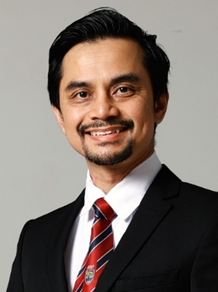
Dr. Hairul Hafizi Bin Hasnan
Dean's Office, Faculty of Creative Arts
Area of Expertise:
Music> Music Technology & Production > Audio Signal Processing & Analysis
From the rhythmic pulse of a drum kit to the intricate logic of sound waves and signal processors, Dr. Hairul Hafizi Hasnan’s journey blurs the line between art and science. Now a Senior Lecturer at the Faculty of Creative Arts, Universiti Malaya, he stands as a rare hybrid — a musician, researcher, educator, and technologist whose work brings creativity and scientific thinking together in meaningful ways.
The Journey: From Drums to Discovery

Dr. Hairul’s unexpected entry into music began in Lahad Datu, Sabah, where he studied at a science boarding school. Music had never been part of his academic plans. But after the SPM examinations, a group of friends invited him for a casual jamming session.
“When we got there, everyone picked their instruments… And then they looked at me and said, ‘Okay, you play the drums!’” he laughs. With no training, he sat at the drum kit — and something clicked. Within months, he was performing at small events as the band’s drummer. “If that day hadn’t happened, I don’t think I’d be who I am today,” he reflects. “That one unexpected moment opened the door to everything that followed.”
After matriculation, he pursued a Bachelor’s degree in Physics with Electronics, driven by curiosity for how the world works. But music pulled strongly. He performed regularly with indie bands, playing at clubs, weddings, and events while trying to keep up with demanding coursework. “Physics with Electronics is not easy,” he admits. “And I was spending three or four nights a week performing.” His grades slipped, and facing possible dismissal, he made a bold decision: he switched to a Bachelor of Arts in Music Studies. “It wasn’t easy. My parents were worried. But I knew this was what I really wanted.”
His choice paid off. Before even completing his degree, Dr. Hairul was offered a full-time position as an in-house drummer at Radio Televisyen Malaysia (RTM). There, he performed live on national television, recorded tracks for well-known artists, and worked alongside experienced musicians. “I thought I’d found stability,” he says. “I told myself, ‘Finally, no more physics, no more math!’”
But the years of constant performing took a toll. He developed a severe muscle strain in his left arm that left him unable to sleep lying down. “That’s when I told myself: I can’t do this forever. I need to think ahead.” Around the same time, he learned about a scholarship to pursue postgraduate studies in Music Technology — a field that perfectly combined his musical experience and scientific background. “It felt like fate. My background in physics and my passion for music finally connected.” That moment became the turning point that led him into research and academia.
Bridging Science and Sound
During his Master’s and PhD, Dr. Hairul rediscovered the physics behind sound. He immersed himself in spectral analysis, visualizing how frequencies, harmonics, and resonances shape the timbre of musical instruments. Using tools such as the Constant-Q Transform (CQT) and Short-Time Fourier Transform (STFT), he blended mathematics with artistic intuition. “It was like returning to physics,” he says. “Only this time, I was studying the beauty behind the equations.”
His research philosophy reflects this balance: art is science beautifully applied. “What is harmony if not frequency arranged? What is sound if not air vibrating?” he shared during the interview.
“Science and art are not opposites. They are partners.” - says Dr. Hairul.
Research, Impact, and Innovation
One of Dr. Hairul’s most meaningful research projects is the Technology-Enhanced Music Education for the Visually Impaired, funded under Universiti Malaya’s Global Transformation Research Grant. The project, which has been awarded a funding of RM 30,970 aims to create a tactile teaching aid that uses raised surfaces and audio feedback to help visually impaired learners understand musical pitch, rhythm, and notation. “The visually impaired have incredibly sensitive ears,” he says. “But it’s difficult for them to visualize how notes relate on a staff. This tool bridges that gap.”
His research also extends into creative exploration such as found-sound composition, where everyday noises become musical material. His works — from reimagined fragments of Negaraku to soundscapes from Giam Kancing forest — merge culture, memory, and environmental awareness. “It’s about reminding people that sound is part of our ecosystem,” he says. “Every bird call, every rustling leaf… They all tell a story.”

Beyond research, Dr. Hairul is deeply active in public education. He frequently collaborates with RTM, conducting workshops on audio engineering and production. He also advises a private institution on developing a Diploma in Audio Engineering program, ensuring alignment with industry needs. His most visible outreach comes from TikTok, where he explains audio concepts to young musicians. “I wanted to counter all the misinformation online,” he explains. “I wanted to give people something accurate and easy to understand.” His videos have reached thousands of viewers.
He has been featured on Astro Awani, TV1’s Selamat Pagi Malaysia, and serves as a panelist for the BOH Cameronian Arts Awards. He was also invited as a keynote speaker at ICOMAC 2025. Through all these roles, his goal remains the same: making knowledge accessible. “The goal is not just to teach, but to inspire,” he says.

The path, however, was not always smooth. “When I started my PhD, I thought my background in C++ would make programming easy — but I was wrong.” Learning Max/MSP and digital signal processing from scratch was a challenge. “It took me six months just to get one compressor plugin to work,” he laughs. But the struggle became central to his philosophy: patience, persistence, and pride. “You can’t rush discovery. Sometimes the process itself is the reward.”

Dr. Hairul attributes much of his growth to his mentor, Associate Professor Khairil Anwar Dean Kamarudin. “He saw potential in me when I didn’t see it myself,” he says. “He taught me that talent means nothing without discipline, humility, and sincerity.”

Looking to the future, Dr. Hairul hopes to become Malaysia’s first full professor in audio engineering — not for prestige, but to show students that science and creativity can thrive together. His upcoming projects include spectral analyses of Malaysian traditional instruments, research on the acoustics of Dondang Sayang performance spaces, and two new Malay-language books: Pemampat Audio: Sejarah, Kini dan Masa Depan and a new edition of Asas Rakaman dan Produksi Muzik. He also continues producing albums for indie artists, helping nurture Malaysia’s music scene from within.
“I believe in being honest with my work — where science meets art, patience shapes progress, and every effort, no matter how small, becomes part of something meaningful”- added Dr Hairul.
When asked what he is most proud of, he answers simply: “That I never gave up.” His life — from a surprise jamming session to a career uniting art, science, and education — reflects a deep belief in honest work and meaningful progress. As he puts it, “I believe in being honest with my work — where science meets art, patience shapes progress, and every effort, no matter how small, becomes part of something meaningful.” To young researchers and musicians, his advice is simple yet profound: “Always believe in yourself. Be honest. Don’t take shortcuts. And most importantly, never give up. Having a good mentor can change everything.”
#BridgingScienceAndSound #MusicTechnology #AudioEngineering #SoundStudies #CreativeArts #MusicResearch #SoundAndMusic #ExperimentalMusic #PhysicsOfSound #DigitalSignalProcessing #SoundWaves #AudioScience #STFT #ConstantQTransform #UniversitiMalaya #UMResearchers #CreativeResearch #HigherEducationMalaysi #ScienceAndArt #AssistiveTechnology #VisualImpaired #MalaysianMusic #CreativeEducation #TikTokEducation
Researcher featured:
DR. HAIRUL HAFIZI BIN HASNAN
Dean's Office, Faculty of Creative Arts
For inquiries, please contact:
T: 03-79673288
Author:

Farah Hannan Abd Nasir
A PhD student from the Physics Department who’s eager to blend science and storytelling - my goal is to make science relatable and exciting for everyone. When I’m not researching organic electronics, I enjoy playing the viola and painting with watercolours.
Copyedit:
Siti Farhana Bajunid Shakeeb Arsalaan Bajunid, Assistant Registrar, UM

Comments